Jaguar Land Rover: Automation and Cohesive UX

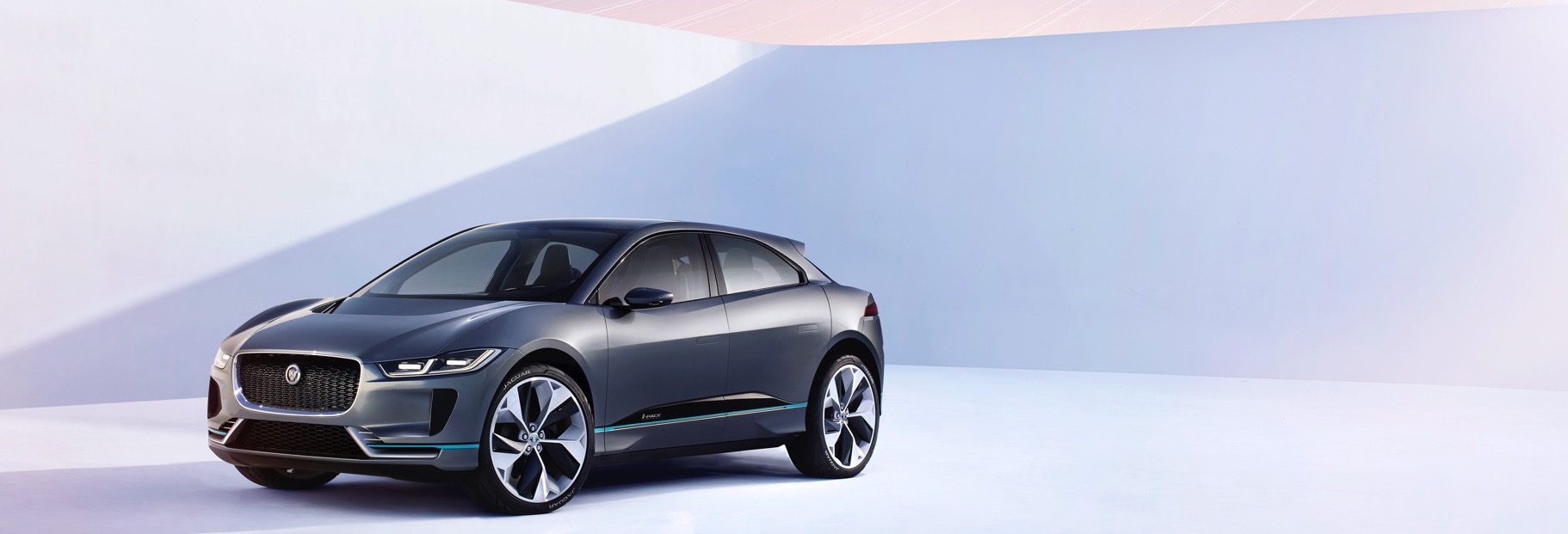
While on contract with Jaguar Land Rover, I worked on multiple projects ranging from the visual update of the Jaguar Land Rover Innovation Labs website to designing a windscreen concept for the first wave of Level 5 (100% autonomous) vehicles. While some of my work at JLR remains confidential, I’ve included a few project examples throughout this site.

If you’d like more details, please reach out.

Exploring Automation

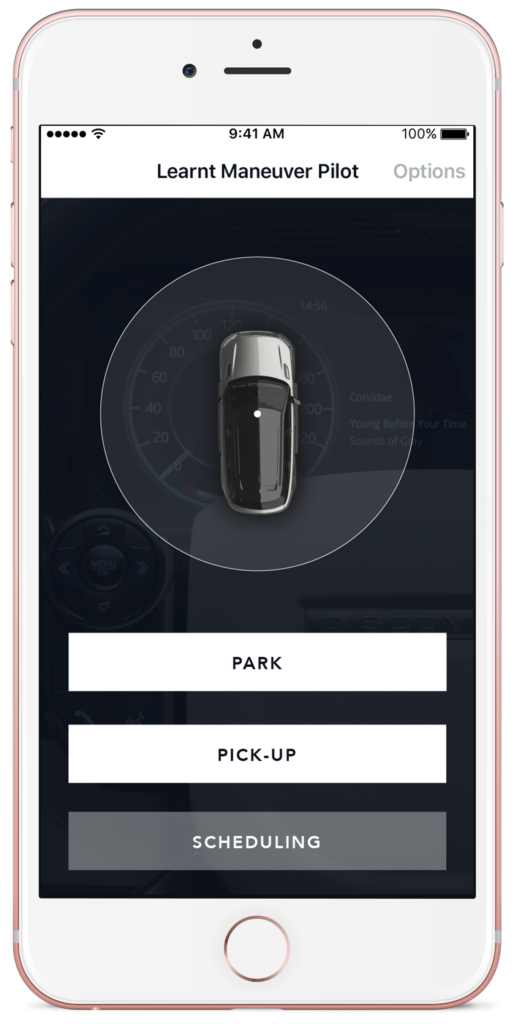
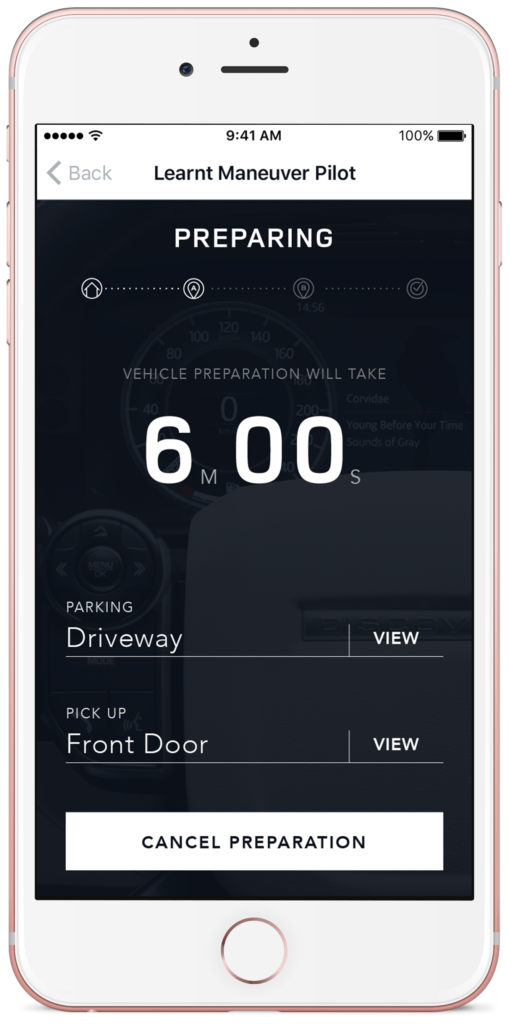
Learnt Maneuver Pilot (LMP) explored the best way to train drivers to trust autonomous vehicles.  Using a combination of in-vehicle and mobile apps, LMP’s mission was to communicate the vehicles intentions and actions so that the driver could feel confident trusting the vehicle with short autonomous tasks such as parking and pick-up.

For the research phase, drivers were asked to describe and visually portray their daily departure and parking habits using a set of laser-cut wooden models. The models allowed the research team to better understand the intricacies of user’s driving habits within a set distance of their homes.  This allowed us to better understand what physical obstacles, preferences, and personal challenges drivers face that could be addressed by LMP.

To the left, you see two screens from the beginning of the mobile experience.  Because a version of this project is still live, those are all the visuals I can share at this time.

If you’d like to know more about LMP or my role in this project, feel free to reach out.

Cohesive UX

The Cohesive UX project aimed to address the systemic issue that influenced all digital design at JLR: silos. Our goal was to create a cohesive digital experience to be implemented in model year 2023.

As a company strongly focused on engineering, little thought was paid to how the digital experience presented across all displays.  This was especially an issue for the Range Rover, which featured 9 screens, all designed by separate teams across two continents.

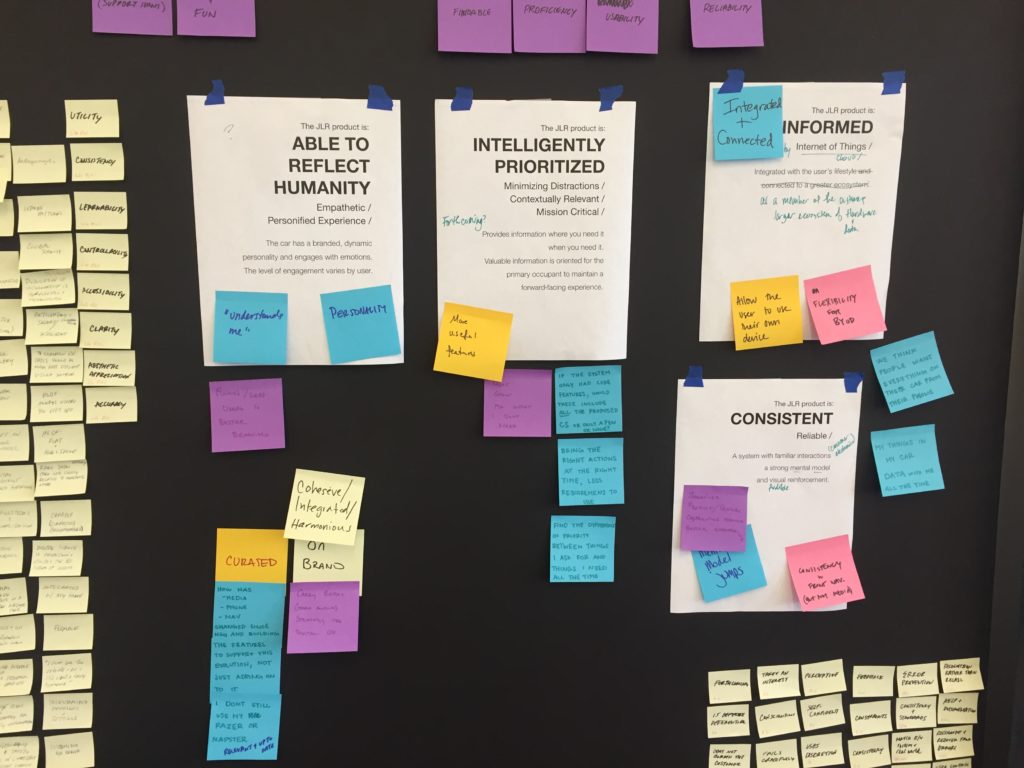
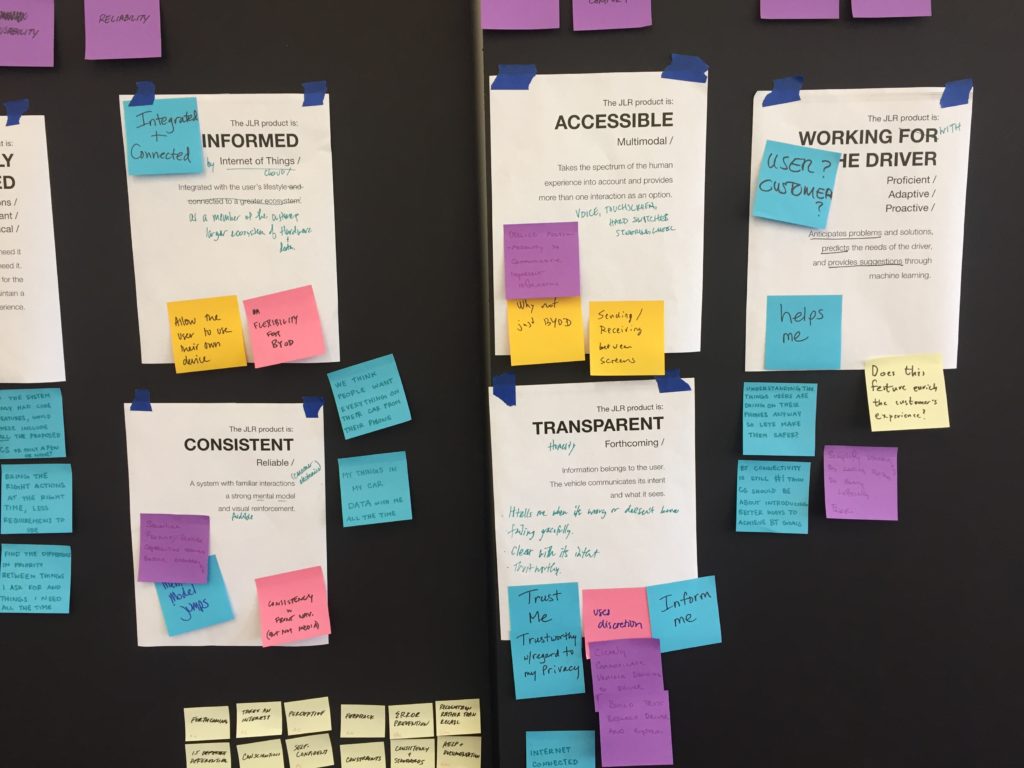
The Cohesive UX project started with the Jaguar Land Rover business and customer principles. From those, we came up with a set of UX principles to guide the design process. These principles were discussed and altered based on the feedback design teams both stateside and in the UK.

Once a set of guiding principles were agreed upon, our team set to work creating principles to guide the design and function of each screen. The main displays in question were the Heads Up Display (HUD), instrument cluster, and HLDF, although our team was also conscious of the role users’ personal devices played into their experience.