Our Approach
Because each alert was limited to one sentence of English text, our main concern was providing drivers with alerts that were actionable and relevant.
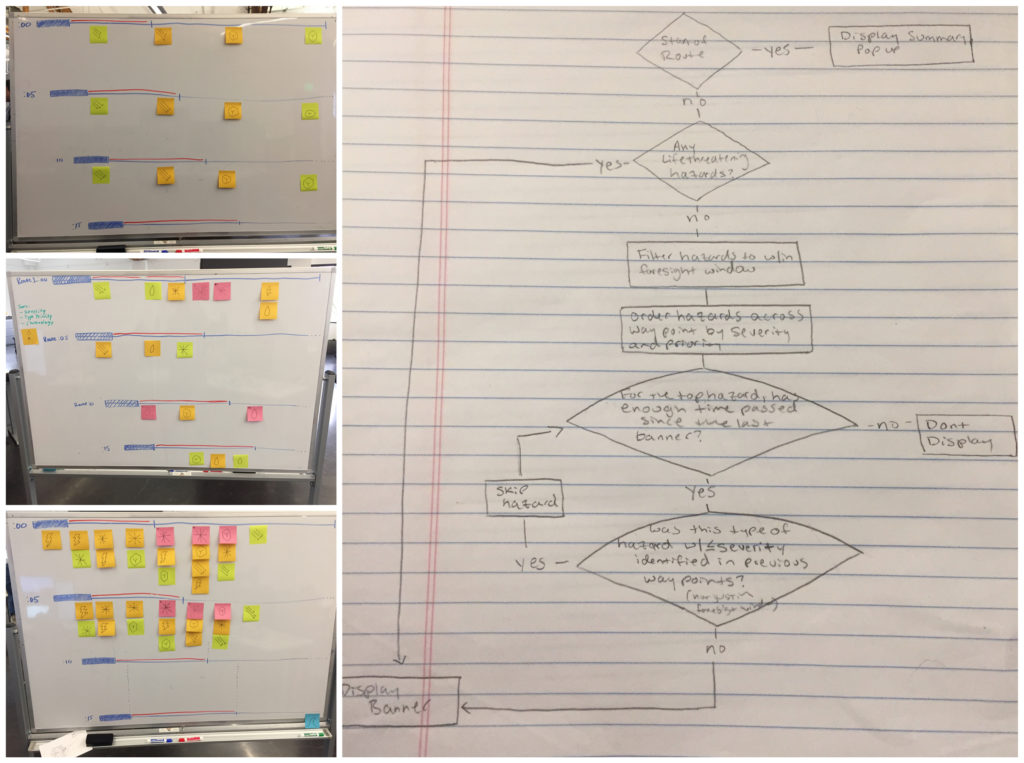
To solve this, we first asked drivers to order hazards from most concerning to least concerning –assuming severity of all was severe –when driving with the roof closed. We asked them to repeat the task assuming the roof was open. We used the resulting “Roof Open” and “Roof Closed” lists to determine priority.
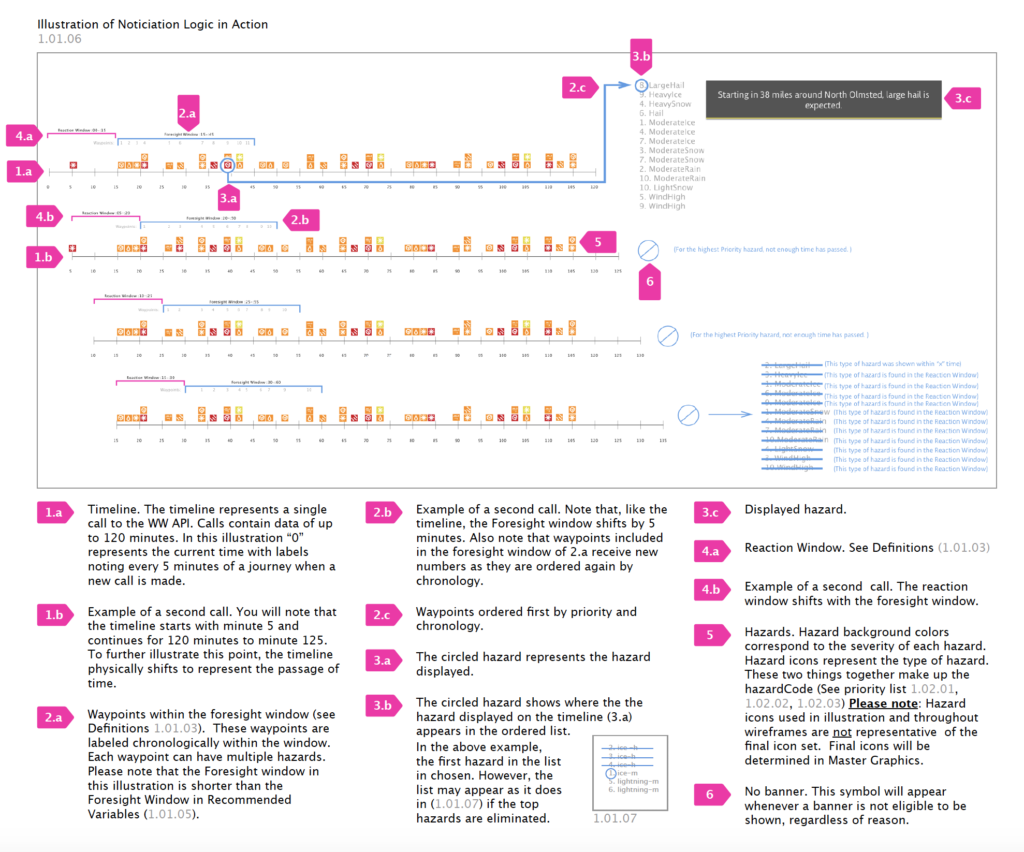
To ensure the information given to the driver was actionable, we eliminated all waypoints after the first 45 minutes, and differentiated two separate windows: The “Reaction Window” (seen in pink) and the “Foresight Window” (seen in blue).
The Reaction Window included the next 15 minutes of a drivers route. Because the driver was likely experiencing or able to predict immediate weather changes, all hazards in this window were eliminated.
The Foresight Window included hazards 15-45 minutes from the drivers present time. This gave the driver enough time to change course should they need to, but not enough time to forget about an event. Any hazards identical to ones found in the reaction window were eliminated, ensuring we weren’t reporting on weather they were already experiencing.